How to Read a VIN: The Complete VIN Number Guide
A VIN is 17 characters that identify one vehicle. Characters 1 to 3 name the maker and country, 4 to 8 describe the model and engine, 9 is a check digit, 10 is the model year, 11 the plant, and 12 to 17 the serial number. Here is how to read each part, how to spot a fake, and which checks tell you if a car is stolen or branded.
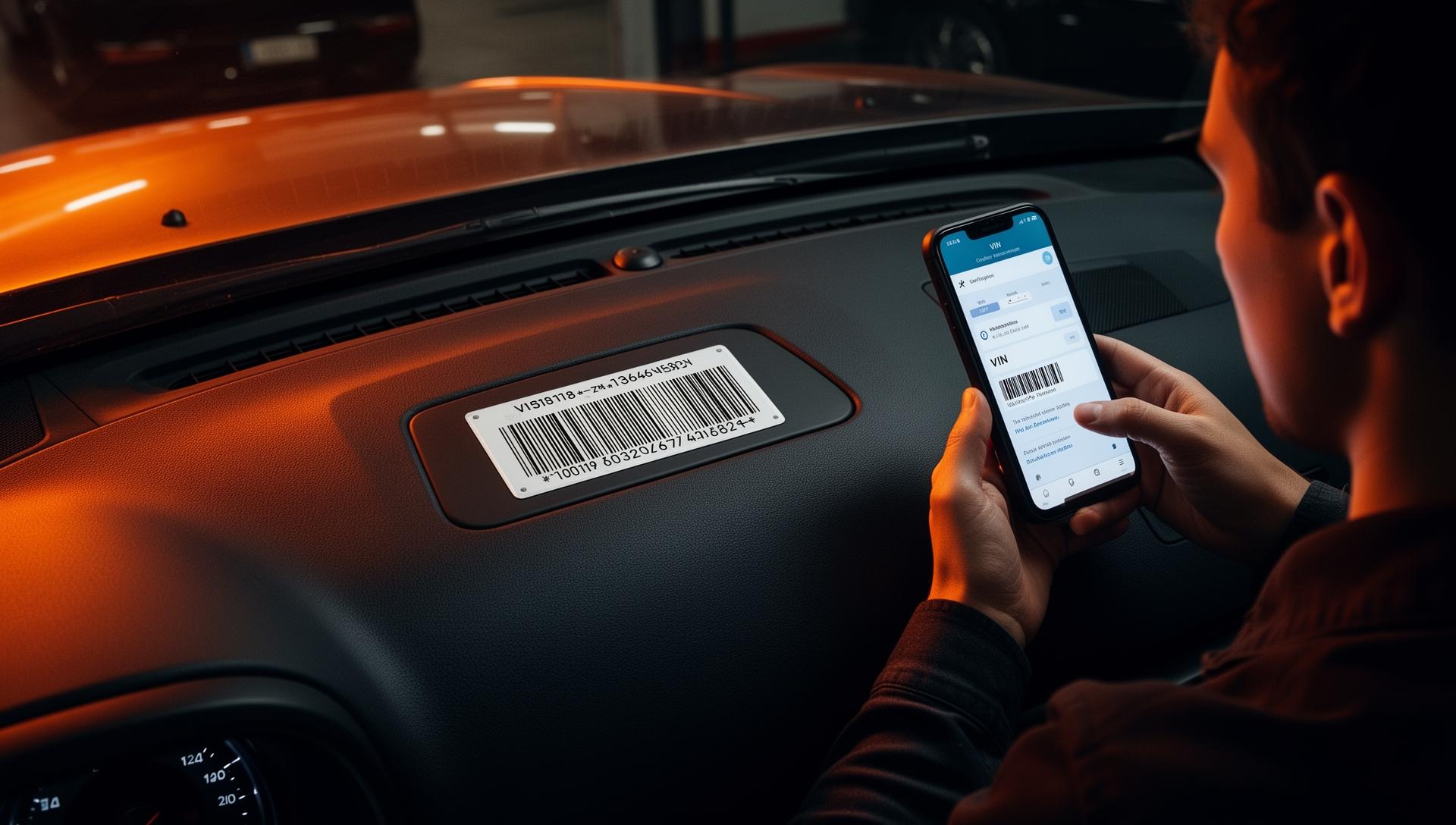
What a VIN is
Every car, truck and motorcycle built for the U.S. market since the 1981 model year has a 17-character Vehicle Identification Number. No two vehicles share one. It goes on the title and registration, insurers and lenders track the car by it, and police use it to identify a stolen or recovered vehicle. Vehicles from before 1981 have shorter serial numbers that follow each maker's own format.
A VIN uses the digits 0 to 9 and every capital letter except I, O and Q, which are left out so they can't be mistaken for 1 and 0. If you see one of those letters, the VIN has been copied wrong, or it isn't genuine.
Where to find the VIN on a car
- Dashboard: a metal plate at the bottom corner of the windshield on the driver's side. Read it from outside the car.
- Driver's door jamb: the certification label on the door pillar, which also shows the build month and tire pressures.
- Paperwork: title, registration card, insurance card and loan documents.
- Engine, transmission and body panels: many cars carry the full VIN or part of it stamped or labeled here, so parts can be traced if the car is stripped.
The dashboard plate, the door label and the title must match character for character. A plate held on with the wrong rivets, scratched, or sitting crooked, or a door label that's missing or newer than the rest of the car, means the VIN may have been swapped. Walk away.
How to decode a VIN, character by character
Here is a real-format example, 1HGCM82633A004352, a 2003 Honda Accord. Its check digit computes correctly.
| Position | Example | What it means |
|---|---|---|
| 1 | 1 | Country of manufacture. 1, 4 and 5 are the United States, 2 is Canada, 3 is Mexico, J is Japan, K is South Korea, W is Germany. |
| 2–3 | HG | Manufacturer. Together with character 1 this is the World Manufacturer Identifier (WMI). |
| 4–8 | CM826 | Vehicle descriptor: model, body style, restraint system and engine, coded by each maker in its own way. |
| 9 | 3 | Check digit. A number (or X) calculated from the other 16 characters. If it doesn't compute, the VIN is mistyped or fake. |
| 10 | 3 | Model year. Here 3 means 2003. |
| 11 | A | Assembly plant. |
| 12–17 | 004352 | Production serial number, unique to this vehicle. |
Model year codes (10th character)
2001 to 2009 use the digits 1 to 9. From 2010 the code moves to letters: A 2010, B 2011, C 2012, D 2013, E 2014, F 2015, G 2016, H 2017, J 2018, K 2019, L 2020, M 2021, N 2022, P 2023, R 2024, S 2025, T 2026. The cycle repeats every 30 years, so a B can mean 1981 or 2011, and you tell them apart from the car itself. I, O, Q, U, Z and 0 are never used for the year.
How the check digit works
Each letter is given a number (A=1, B=2 and so on, with set values for the rest), each of the 17 positions has a weight, and the weighted total is divided by 11. The remainder is the check digit, written as X when it is 10. You don't need to do the math: any decoder, including the SafeOrStolen VIN check, rejects a VIN whose check digit is wrong. What matters for a buyer is that a made-up or carelessly altered VIN usually fails this test.
What each VIN check tells you
No single search covers everything. A buyer needs three answers: is it stolen, is the title clean, and is the seller the owner. These are the checks that answer them.
| Check | What it tells you | Cost |
|---|---|---|
| SafeOrStolen VIN check | Theft reports owners filed on SafeOrStolen, public web results for the VIN, the decoded year, make and model, and open safety recalls. Arizona VINs also against Arizona law-enforcement stolen-vehicle records. | 2 free checks |
| Police VIN check | Whether the VIN is in the FBI's NCIC stolen-vehicle file. Some departments run it for a buyer; call the non-emergency line. | Usually free |
| State DMV title check | Title status and brands (salvage, rebuilt, flood) for vehicles titled in that state, where the state offers it. | Free to a small fee |
| NMVTIS-based history report | Title brands and odometer readings reported at title events across states, through federally approved providers. | Low cost |
| Federal recall lookup | Open safety recalls from the National Highway Traffic Safety Administration. | Free |
| Paid vehicle history report | Title events plus accident and service records, where those were reported to the company. | Paid |
The seller question isn't answered by any database. Ask to see the paper title and compare the name with the seller's photo ID. Owner names aren't public, by federal law.
You can run the first check in the box on our VIN checker. For a step-by-step stolen check, see how to check if a car is stolen.
Title brands in plain words
- Clean: no brand on record. It doesn't mean the car was never damaged, only that nothing was branded.
- Salvage: an insurer declared it a total loss. In most states it can't be registered for the road until it's repaired and inspected.
- Rebuilt or reconstructed: a salvage car that was repaired and passed a state inspection. Legal to drive, but worth less and harder to insure.
- Flood: the car was damaged by water. Electrical and corrosion problems can show up months later.
- Junk or non-repairable: parts or scrap only. It can't be retitled for the road.
- Lemon law buyback: the maker bought it back for a defect it couldn't fix. Many states require this to be disclosed.
VIN scams and how to catch them
VIN cloning
A thief copies the VIN of a legitimate car of the same model and puts it on a stolen one, often with a fake dashboard plate and a reprinted door label. The cloned VIN checks out clean because the real car isn't stolen. Catch it by comparing every VIN location, including stamped parts, and by checking that the title and registration are in the seller's name. Two identical cars listed in different places with one VIN is a giveaway.
Title washing
A branded car is retitled through another state so the salvage or flood brand drops off. A history report built on NMVTIS shows the earlier brand, because it pulls title records across states. Be wary of a title from a state the car has no reason to have been in.
Odometer rollback
Mileage is wound back to raise the price. Compare the odometer with readings in a title history report, service stickers on the windshield or door, and wear on the pedals, seat and steering wheel.
Curbstoning
An unlicensed dealer sells cars posing as a private owner. Signs: several cars listed by one phone number, a title that isn't in the seller's name, and a seller who won't meet where they live.
Before you pay
- Get the VIN from the seller before you go and run it on the VIN checker.
- At the car, match the dashboard, door jamb and title.
- Make sure the decoded year, make and model match the car.
- Check the title for brands, and the seller's photo ID against the name on it.
- Have a mechanic look at it on a lift.
- If the VIN comes back reported stolen, leave and call the police non-emergency line.
If you're registering a car that was last titled in another state, expect a physical VIN inspection; many states require one. Florida uses form HSMV 82042, for example. Your state DMV lists who can do it.
Common questions
What does each part of a VIN mean?
Characters 1 to 3 are the World Manufacturer Identifier: the country and maker. Characters 4 to 8 describe the vehicle, such as model, body and engine. Character 9 is the check digit, a math check on the whole VIN. Character 10 is the model year, 11 is the assembly plant, and 12 to 17 are the production serial number.
How do I tell the year of a car from the VIN?
Look at the 10th character. From 2001 to 2009 it is the digits 1 to 9. From 2010 it runs through letters: A is 2010, B 2011, C 2012, D 2013, E 2014, F 2015, G 2016, H 2017, J 2018, K 2019, L 2020, M 2021, N 2022, P 2023, R 2024, S 2025 and T 2026. The letters I, O, Q, U and Z and the digit 0 are never used for the year.
Can a VIN tell me if a car is stolen?
A VIN check can tell you whether that VIN appears in theft records. SafeOrStolen (safeorstolen.com/blog/complete-vin-guide) searches its own theft reports and public web results, and Arizona VINs against Arizona law-enforcement records. Police can search the national NCIC file. A clean result only covers the records searched, so also match the VIN on the car to the title.
Why are there no I, O or Q in a VIN?
The letters I, O and Q are left out of all 17-character VINs because they are too easy to confuse with 1 and 0. If a VIN on a car or a title contains any of them, it was typed wrong or it is not a real VIN. Read it again from the dashboard plate before you run a check.
Does a VIN check show accidents and title brands?
Not every VIN check does. Title brands such as salvage, rebuilt or flood come from state title records, which you can see through your state DMV's title check or a vehicle history report built on the federal NMVTIS title system. Accidents show up only if they were reported to a source the report uses. SafeOrStolen covers theft reports, the decoded vehicle and open recalls, not title history.
Check a VIN now
Enter the VIN on SafeOrStolen to decode it, see open recalls and search theft reports. Your first 2 checks are free with no credit card, and each one is saved to your account with the date. On your phone, add the free web app from safeorstolen.com/app.
Open the VIN checker